
Free conversion audit
Get a tailored action plan based on your current funnel.
Skio vs Recharge is no longer a simple challenger-versus-incumbent decision. Recharge acquired Skio in April 2026, but the two Shopify subscription platforms still have separate products, pricing, workflows, and customer experiences. That makes the choice more nuanced, not less.
Your decision should come down to the economics and operational requirements of your subscription program. Monthly software cost matters, but transaction fees, cancellation recovery, payment failures, portal usability, integrations, and migration risk can each produce a much larger financial effect.
This comparison uses public, purchase-facing pricing and official product documentation checked on September 2, 2026. It gives you a condition-based verdict, a transparent cost model, and the questions to answer before signing a contract or moving active subscribers.
Skio vs Recharge: The Quick Verdict
Choose Recharge when you need a lower entry point, a wider pricing ladder, or continuity with an existing Recharge setup. Its public Shopify plans begin at $25 per month for qualifying new merchants with their first 50 subscribers, then move to Starter and Plus tiers with broader retention and development capabilities.
Choose Skio when your established subscription program can justify its higher minimum price and its specific combination of lifecycle Journeys, Build-a-Box options, portal controls, and migration process. Skio currently offers one public Scale plan, so it is not positioned as the economical starting point for a small subscription program.
If you already use either platform, do not migrate only because of the acquisition. Build a business case around total platform cost, subscriber save rate, failed-payment recovery, support workload, and the implementation risk of changing systems.
What Changed When Recharge Acquired Skio?
Recharge announced its acquisition of Skio in April 2026. The announcement says both platforms continue operating and that existing teams remain the point of contact while the companies review how to combine capabilities.
Skio’s announcement is similarly clear: both products continue shipping while the teams work toward a combined future. That means merchants are still choosing between two live products today, but the roadmap is less independent than it was before the acquisition.
Treat roadmap assumptions as risk, not fact. Ask each sales team which features are generally available now, which are beta, whether your quoted price is protected for the contract term, and what happens if the products converge. Put material answers in the agreement instead of relying on a demo conversation.
Skio vs Recharge Pricing in September 2026
The Skio Shopify App Store listing shows Scale at $599 per month, or $5,988 per year, plus 1% + $0.20 per order involving a subscription. Skio’s official billing guide says that percentage applies to the final order total, including subscription and one-time items, shipping, and tax, less discounts. The annual commitment makes the base fee equivalent to $499 per month before transaction charges.
The Recharge Shopify App Store listing shows three public options: $25 per month with no transaction fee for the first 50 subscribers on its qualifying entry plan; Starter at $99 per month plus 1.49% and 19 cents per transaction; and Plus at $499 per month plus 1.34% and 19 cents per transaction, with scalable rates noted for growth.
| Public plan | Base fee | Published usage fee | Illustrative cost at $25K and 500 orders | Illustrative cost at $100K and 2,000 orders |
|---|---|---|---|---|
| Recharge Starter | $99 monthly | 1.49% + $0.19 | $566.50 | $1,969 |
| Recharge Plus | $499 monthly | 1.34% + $0.19 | $929 | $2,219 |
| Skio Scale monthly | $599 monthly | 1% + $0.20 | $949 | $1,999 |
| Skio Scale annual equivalent | $499 monthly equivalent | 1% + $0.20 | $849 | $1,899 |
These scenarios assume a $50 average subscription order and apply the public rates mechanically. They exclude taxes, add-ons, negotiated volume rates, mixed-order treatment, and implementation charges. Your Shopify approval screen or signed proposal controls, so request a written total-cost model using your actual subscription revenue and order count.

Subscription Merchandising and Build-a-Box
A subscription app must help a shopper understand the offer before it can retain that shopper. Evaluate how each platform handles the product-page selling plan, one-time versus subscription pricing, delivery frequency, prepaid plans, bundles, and add-on products.
Skio’s public Scale feature set includes static and dynamic Build-a-Box experiences, volume discounting, and a no-code portal. Its official Build-a-Box documentation also describes sectioned boxes and customer editing, while noting that some combinations have limitations. Recharge Starter includes a subscription-focused product-page widget and upsell tools; Recharge Plus adds customizable bundles and tiered discounts.
Do not score a platform from a feature checklist alone. Create a representative product with real variants, discounts, shipping rules, and subscription frequencies, then test it on mobile. The winning implementation is the one that communicates the offer clearly and reaches Shopify checkout without price, inventory, or cart-state surprises. Our Shopify checkout optimization guide covers the surrounding friction to test.
Customer Portals and Subscriber Self-Service
Both products provide customer portals and passwordless access options. Recharge documents its Affinity and Unity portal experiences, including Shopify customer-account extensions, while Skio documents magic links, payment controls, and multiple portal versions. Passwordless login is therefore not a Skio-only differentiator.
Run five tasks with people who have never seen the portal: skip the next order, swap a product, change a delivery date, update a payment method, and pause or cancel. Record task completion, time, errors, and whether the person needed help. A polished portal that hides a critical action is still expensive because the cost moves into support tickets and unwanted cancellations.
Cancellation Flows and Payment Recovery
Skio Scale lists multi-step cancellation flows, automated lifecycle Journeys, and smart payment recovery. Recharge Starter lists Smart Cancellation Prevention and Failed Payment Recovery, while Plus adds loyalty rewards and referrals. Both platforms can address voluntary churn and failed renewals, but your configuration determines the result.
Build cancellation alternatives around the reason selected. A subscriber with too much product needs a skip, frequency change, or smaller quantity; a price-sensitive subscriber may respond to a limited credit; a customer with a product issue needs a swap or support path. Sending every person the same discount can train customers to threaten cancellation.
Track cancellation starts, completed cancellations, pauses, skips, swaps, accepted incentives, recovered payments, and repeat cancellation within 30 to 60 days. Report saved recurring revenue separately from discounts granted so a generous offer does not look more profitable than it is.

Analytics, Integrations, and Developer Access
Skio Scale publicly includes analytics with segmentation, integrations, webhooks, and API access. Its Journeys documentation describes trigger, condition, and action logic with debugging and node-level outcome reporting. Recharge Starter includes analytics and industry benchmarks; Plus adds its JavaScript SDK and Storefront API.
Map your required data flow before the demo. Include Shopify, your email and SMS platform, customer support, attribution, finance reporting, fulfillment, and any headless storefront. Then ask each vendor to demonstrate the exact event, field, and update direction you need.
An integration logo does not prove operational fit. Confirm whether the connection is native or middleware-based, which plan unlocks it, how quickly data syncs, whether historical events backfill, and how failures are surfaced. If a missing event breaks a churn flow or finance report, that gap belongs in the cost model.
Migration Risk and Operational Continuity
A subscription migration touches active contracts, future billing dates, product variants, addresses, discounts, and payment references. It is a revenue operation, not a CSV upload.
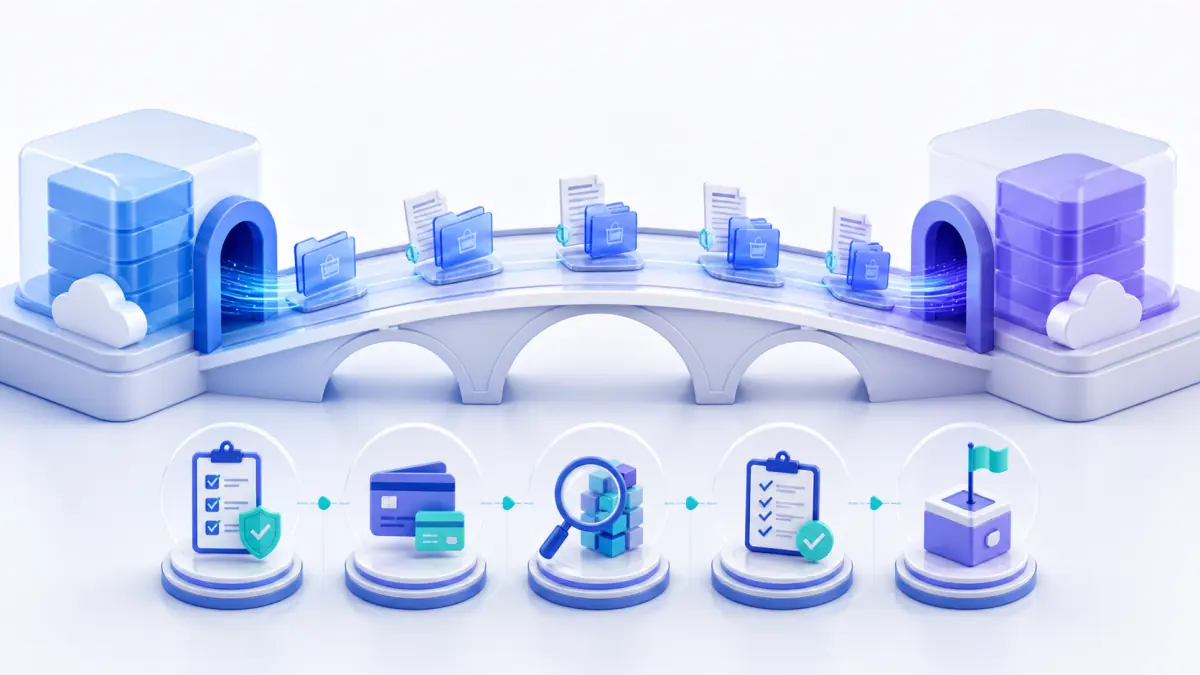
Skio’s migration documentation explains that subscriptions are copied into new Shopify contracts because one app cannot take over contracts created by another. It describes a preview-and-approval process, coordinated legacy billing shutdown, portal redirects, and payment handling that depends on the processor.
Recharge documents a self-service migration tool, payment-method requirements, and imports processed in batches of up to 5,000 rows. Recharge also warns that historical and analytics data do not migrate into the new subscription records.
- Inventory active and paused subscriptions, variants, discounts, dates, and payment processors.
- Export source data and confirm that you can retain a secure historical reference.
- Test new purchases, portal access, notifications, taxes, shipping, and renewals.
- Review the migration preview and reconcile counts before approving the cutover.
- Stop legacy billing at the coordinated time, then monitor upcoming renewals and support contacts.
Which Shopify Stores Fit Skio or Recharge?
Recharge is the more accessible starting point when you have fewer than 50 subscribers, want to prove demand before accepting percentage-based fees, or already depend on Recharge-specific workflows. Its tier ladder lets a program begin smaller, although transaction charges become increasingly important as recurring volume grows.
Skio merits a closer look when you are already operating a meaningful subscription business and its portal, Journeys, Build-a-Box, analytics, or migration workflow solves a documented limitation. The higher minimum makes sense only when those capabilities return more value than their total cost.
At higher volume, neither public sticker price is sufficient. Ask for volume rates and calculate annual cost against the same revenue and order assumptions. Include engineering time, implementation, support workload, discounts used to save cancellations, and expected contract terms.
If you are surveying the full market rather than these two platforms, use our best Shopify subscription app comparison to evaluate lower-cost and retention-specialist alternatives.
How to Make the Final Skio vs Recharge Decision
Use a weighted scorecard tied to your economics. Price should carry substantial weight, but not so much that you ignore renewal recovery or operational risk.
- 25% total cost: Annual base fee, transaction charges, add-ons, and implementation.
- 20% subscriber experience: Product offer clarity, portal tasks, and mobile usability.
- 20% retention operations: Cancellation alternatives, payment recovery, and measurement.
- 15% integrations and data: Required events, reporting, APIs, and failure visibility.
- 10% migration: Payment compatibility, data mapping, cutover, and rollback planning.
- 10% contract and roadmap: Rate protection, service terms, and acquisition-related change.
Require both vendors to demonstrate the same scenarios using the same sample catalog. Score what works in the product now, not what appears on a roadmap. A short proof of concept can expose limitations that a polished sales deck will not.
Frequently Asked Questions About Skio vs Recharge
Does Recharge own Skio?
Yes. Recharge announced the acquisition in April 2026. Both products are still operating, and the companies have said they are continuing to develop them while working toward a combined future.
Is Skio cheaper than Recharge?
It depends on your tier, subscription revenue, order count, annual commitment, and negotiated rate. Recharge has the lower entry price; Skio’s lower published percentage can become more important at higher volume. Model both with your actual data.
Can you migrate from Recharge to Skio without asking customers to re-enter payment details?
Sometimes, but payment handling depends on Shopify and the payment processor. Shopify Payments can simplify the process, while other gateways may require token or account steps. Get a written migration assessment before promising a frictionless move.
Which platform is better for Shopify Plus?
Both can serve sophisticated Shopify programs. The answer depends on bundles, portal requirements, lifecycle automation, integrations, developer access, negotiated fees, and migration constraints—not the Shopify Plus label by itself.
Should an existing Skio or Recharge merchant switch after the acquisition?
Not solely because ownership changed. Monitor contract terms and product announcements, document your export and integration requirements, and switch only when the measured financial and operational benefit exceeds migration risk.
Get a Free Subscription Funnel Audit
The platform is only one part of subscription growth. Offer clarity, product-page UX, checkout friction, cancellation logic, failed-payment recovery, and measurement determine whether the software produces profitable recurring revenue.
Site OptimizR’s conversion rate optimization services examine that complete journey. Request a free subscription funnel audit and we will identify the highest-priority conversion and retention issues before you commit to a platform or migration.