Free conversion audit
Get a tailored action plan based on your current funnel.
Appstle vs Recharge is not a simple cheap-versus-premium decision. Appstle prices its public plans around monthly subscription-revenue caps, while Recharge combines base fees with subscriber or transaction rules. The less expensive headline price can therefore change as your subscriber count, recurring revenue, order value, and feature requirements change.
The right choice also affects more than billing. Your product-page widget, customer portal, payment recovery, cancellation flow, bundles, analytics, and integrations all shape subscription conversion and retention. A lower software bill is valuable only if the customer experience still supports the way you sell.
This comparison uses public pricing and product information verified on September 2, 2026. It also separates new installations from migrations, because moving existing Recharge subscribers to Appstle involves data exports, payment-provider checks, a paused import, and controlled activation.
Appstle vs Recharge: The Quick Answer
Choose Appstle when predictable software cost is the priority and your monthly subscription revenue fits a published tier. Its paid plans currently list 0% transaction fees, and features such as build-a-box appear at a comparatively low base price.
Choose Recharge when its specific retention, implementation, ecosystem, or developer tools justify the total cost. Recharge’s public tiers include cancellation prevention, failed-payment recovery, analytics, and higher-tier API and loyalty capabilities. Those features can be valuable, but you should model the base fee and transaction charges together.
Do not switch an established subscription program based on price alone. Existing payment methods, queued charges, customer records, integrations, and portal behavior can make migration risk more important than the monthly app fee.
- Best value for a smaller Shopify subscription program within a published revenue cap: Appstle.
- Best fit for a team that specifically needs Recharge’s listed retention or Plus-tier capabilities: Recharge.
- Best answer for an existing Recharge merchant with complex payment history: whichever passes a documented migration test.
Appstle vs Recharge Pricing in 2026
The official Appstle Shopify App Store listing and official Recharge Shopify App Store listing show the following public prices as of September 2, 2026. Taxes, Shopify fees, payment-processing costs, add-ons, negotiated rates, and external charges are outside this table.
| Platform and plan | Base price | Published limit or variable charge |
|---|---|---|
| Appstle Free | Free | Up to $500 per month in subscription revenue |
| Appstle Starter | $10 per month | Up to $5,000 per month in subscription revenue; 0% transaction fee listed |
| Appstle Business | $30 per month | Up to $15,000 per month in subscription revenue; 0% transaction fee listed |
| Appstle Business Premium | $100 per month | Up to $100,000 per month in subscription revenue; 0% transaction fee listed |
| Recharge 25–50 | $25 per month | No transaction fees for the first 50 subscribers |
| Recharge Starter | $99 per month | 1.49% plus 19 cents per transaction |
| Recharge Plus | $499 per month | 1.34% plus 19 cents per transaction, with scalable rates advertised |
Appstle is not unlimited. Its free and paid public tiers have explicit monthly subscription-revenue caps. A merchant near a cap should model the next tier now, not after a strong sales month forces a change. A store above the $100,000 Business Premium cap should confirm custom terms directly with Appstle.
Recharge’s small “25–50” tier deserves the same caution. The listing says it costs $25 per month with no transaction fees for the first 50 subscribers, but it does not explain the transition after subscriber 50 on that card. Confirm the in-app billing path before forecasting growth.
Consider an illustrative store with $12,000 in monthly subscription revenue, a $50 average recurring charge, and 240 monthly transactions. Appstle Business fits at $30. Recharge Starter would be approximately $323.40: $99 base, $178.80 from 1.49%, and $45.60 from per-transaction charges. That example is not a performance forecast; it simply shows why total cost must include volume.

What Appstle Pricing Includes at Each Tier
Appstle’s Free plan is a real entry tier, but the $500 monthly subscription-revenue cap makes it best for validation rather than a growing program. The listing includes pay-as-you-go and prepaid subscriptions, a Shopify-native customer portal, multiple frequencies, payment retry, custom shipping, built-in emails, analytics, churn controls, migrations, and integrations.
Starter raises the cap to $5,000 per month and adds manual subscription creation, passwordless portal login, loyalty features, weekly summaries, inventory forecasting, and SMS notifications. Business raises the cap to $15,000 and lists build-a-box, bundling, customized widget themes and locations, cart-page placement, cancellation controls, an advanced portal, and bulk operations.
Business Premium raises the cap to $100,000 and lists product swaps, automatic price and address sync, checkout links, quick-action emails, a custom email domain, order unification, and adding products to subscriptions. Feature availability can change, so confirm any must-have workflow inside the trial before launch.
What Recharge Pricing Includes at Each Tier
Recharge’s current Shopify listing describes the $25 “25–50” plan as including the Starter feature set for the first 50 subscribers. Because that card is subscriber-limited and unusually named, verify exactly how billing changes when you add subscriber 51.
The $99 Starter tier explicitly lists a subscription-first product-page widget, a no-code customer portal, upsell and cross-sell tools, smart cancellation prevention, failed-payment recovery, analytics, and industry benchmarks. This tier’s 1.49% plus 19-cent transaction charge means cost rises with successful recurring volume.
The $499 Plus tier lowers the percentage to 1.34% while retaining the 19-cent transaction charge. It adds hands-on implementation, customizable bundles and tiered discounts, concierge SMS, loyalty rewards, referrals, a JavaScript SDK, and Storefront API access. Recharge’s current pricing page lists Concierge SMS usage separately at $0.03 per message segment in the United States and Canada and $0.06 internationally. A higher base price is rational only when those capabilities create operational or retention value your team will use.
Customer Portal and Subscriber Experience Compared
The customer portal is where subscribers update payment details, change timing, manage products, or cancel. Every unnecessary step creates support work and gives an already-frustrated customer another reason to leave.
Appstle lists a Shopify-native portal on Free, passwordless access on Starter, and advanced portal plus bulk-operation capabilities on Business. Recharge lists a no-code portal on Starter and pairs it with cancellation prevention and failed-payment recovery. Neither feature list tells you how the portal will feel with your theme, catalog, selling plans, and customer-account setup.
Test the five jobs customers perform most often: update payment, skip an order, change a date, swap a product, and cancel. Measure completion without staff help. If either portal hides a high-frequency action, the resulting tickets and involuntary churn can outweigh a price difference.
This is also a Shopify checkout optimization decision. The subscription promise on the product page, cart, checkout, confirmation, and portal should remain consistent. A polished portal cannot repair a confusing initial offer.
Bundles, Upsells, Retention, and Analytics
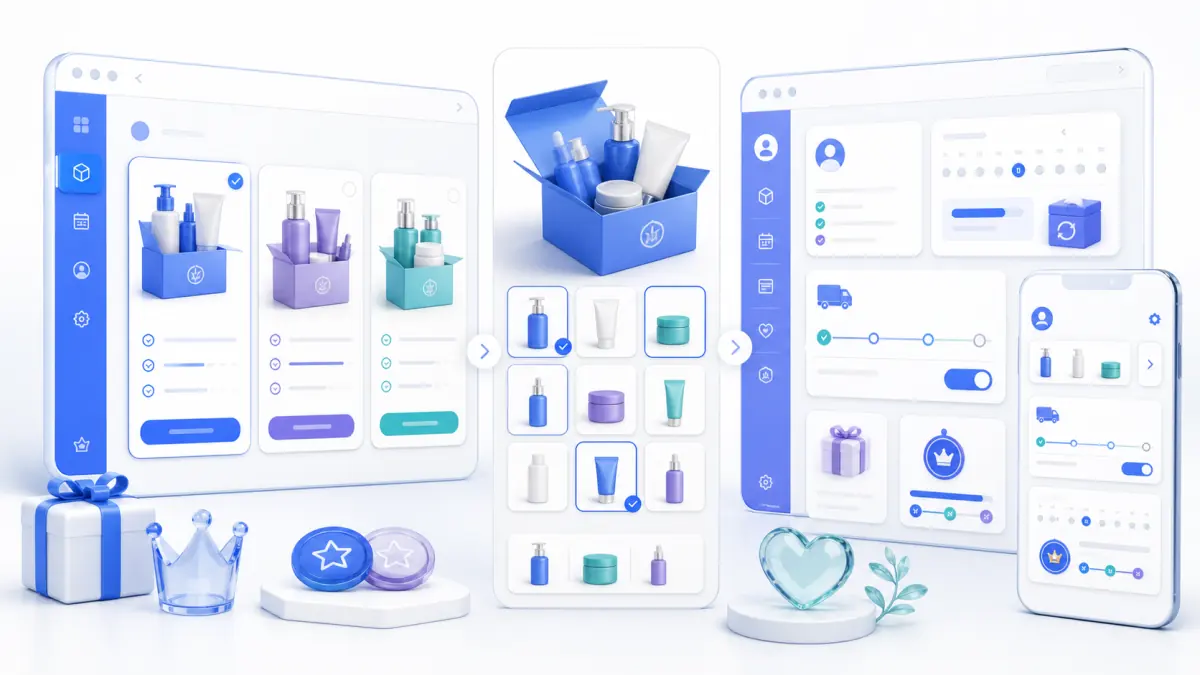
Appstle Business includes build-a-box and bundling at $30 per month within its $15,000 revenue cap. Recharge places customizable bundles and tiered discounts on Plus at $499, while Starter includes upsell and cross-sell tools. These labels are not interchangeable: a fixed cross-sell, a subscriber-editable box, and a tiered bundle require different product and inventory logic.
Retention tools also need workflow-level review. Recharge Starter lists smart cancellation prevention and failed-payment recovery. Appstle lists payment retry and churn control on Free, then additional cancellation controls on Business. Ask each platform to demonstrate the exact cancellation reasons, save offers, retry schedule, payment-update path, and reporting your team needs.
Do not compare dashboard screenshots as if they guarantee results. Define the metrics first: active subscribers, voluntary churn, involuntary churn, recovered payments, average recurring order value, skip rate, cancellation-save rate, and subscription revenue by cohort. The better platform is the one that lets your team act on those numbers reliably.
Integrations and Developer Flexibility
Your subscription app must pass data to email, support, reviews, loyalty, analytics, fulfillment, and finance systems. Appstle’s listing includes app integrations on its Free tier and promotes native connections across its own product family. Recharge’s Plus tier explicitly includes a JavaScript SDK and Storefront API, and Recharge publishes an integration library.
That does not mean every connector supports every event. Before signing, map the events your stack requires: subscription started, renewal processed, payment failed, order skipped, product swapped, cancellation requested, cancellation saved, and subscription ended. Then verify whether each event is available natively, through an API, or only through a third-party automation tool.
Headless storefronts, custom customer accounts, ERP rules, or complex bundles should be tested against documented APIs before a platform decision. Do not assume two features with the same label expose the same fields, rate limits, webhooks, or permissions.

Appstle vs Recharge Migration Risks
A new store can compare features in a trial. An existing Recharge merchant must first confirm whether subscriptions use Shopify Checkout or an external checkout and which gateway holds the payment relationship. Appstle’s migration walkthrough routes Shopify Checkout apps and external-checkout platforms through different paths.
For a Recharge export, Appstle’s official export checklist requests three datasets:
- All subscriptions.
- Queued charges extending up to one year.
- Customer shipping addresses.
Appstle’s detailed migration process says Shopify Payments is supported in its V2 path, while Stripe, PayPal, and Authorize.net are supported in its V1 path. It also says other payment methods cannot be migrated because of Shopify limitations. Confirm your exact gateway and checkout architecture with Appstle before canceling Recharge.
The process requires subscription exports and, for the relevant path, customer data from the payment processor, including identifiers needed to reconnect payment methods. Appstle imports subscriptions in a paused state for review. Its documentation recommends pausing the old platform during import to prevent duplicate deliveries and charges.
Appstle’s migration FAQ gives 24 to 48 hours as a standard overall estimate, while warning that incomplete exports and missing payment information can extend it. Its newer migration guide says the full cutover commonly pauses customer-portal and email activity for 6 to 8 hours after the dry run. Treat both windows as vendor guidance, not guarantees. Build time for reconciliation, portal testing, notification checks, and a rollback decision.
Which Shopify Subscription App Is Better?
Appstle is the stronger financial fit when your recurring revenue stays inside a published cap, you want 0% listed transaction fees on a paid tier, and its corresponding portal, bundle, retention, and integration features pass testing.
Recharge is the stronger functional fit when you specifically need the capabilities listed on Starter or Plus, your team values its implementation path or developer tools, and the incremental value exceeds the base and transaction costs.
Staying put may be the right choice when migration creates unacceptable payment-method, queued-charge, integration, or subscriber-experience risk. A cheaper destination does not justify double charges, failed renewals, broken customer access, or lost reporting continuity.
If neither option cleanly fits, review the broader Shopify subscription app comparison. The right shortlist depends on catalog complexity, subscriber volume, gateway, checkout model, retention workflows, and development resources.
How to Test Appstle or Recharge Before You Commit
Use a controlled acceptance plan instead of clicking through a demo. Test the exact products, rules, customer actions, and integrations that generate recurring revenue.
- Calculate current subscribers, monthly subscription revenue, average recurring charge, and transactions.
- Price today’s volume and the next 12 months against every relevant cap and variable fee.
- Rebuild one simple subscription, one prepaid offer, and one bundle or complex selling plan.
- Test product page, cart, checkout, confirmation, account access, portal, and transactional email on mobile.
- Trigger a failed payment, skip, swap, date change, cancellation, and save offer in a controlled account.
- Verify required events in email, analytics, support, loyalty, fulfillment, and finance tools.
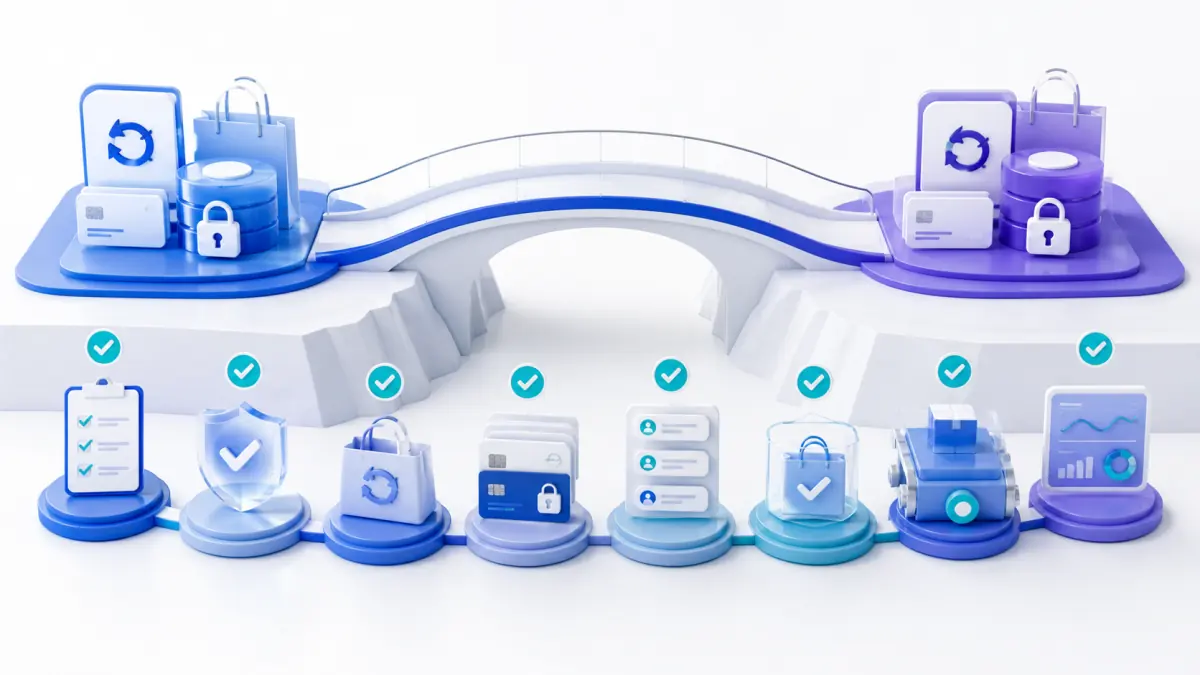
- If migrating, reconcile subscriber count, next-charge dates, products, prices, addresses, payment references, and queued charges before activation.
- Document the go-live freeze, communication plan, responsible owner, rollback threshold, and post-launch monitoring window.
The same discipline used to increase your Shopify conversion rate applies here: define the customer behavior, remove friction, measure the outcome, and avoid changing several variables at once.
Get a Free Shopify Subscription Conversion Audit
Your subscription platform should make the offer easier to buy, the recurring experience easier to manage, and the economics easier to understand. If you are comparing Appstle vs Recharge, the fastest path to a confident choice is an audit of your current subscription funnel, costs, portal friction, retention flows, and migration exposure.
Site OptimizR will identify the highest-impact gaps across your product page, selling plan, cart, checkout, customer portal, cancellation flow, payment recovery, and analytics. You will receive a prioritized action plan tied to the way your store actually sells.
Get your free subscription conversion audit before installing, upgrading, or migrating. We will help you choose the platform and rollout plan that fit your revenue, customers, and operating reality.